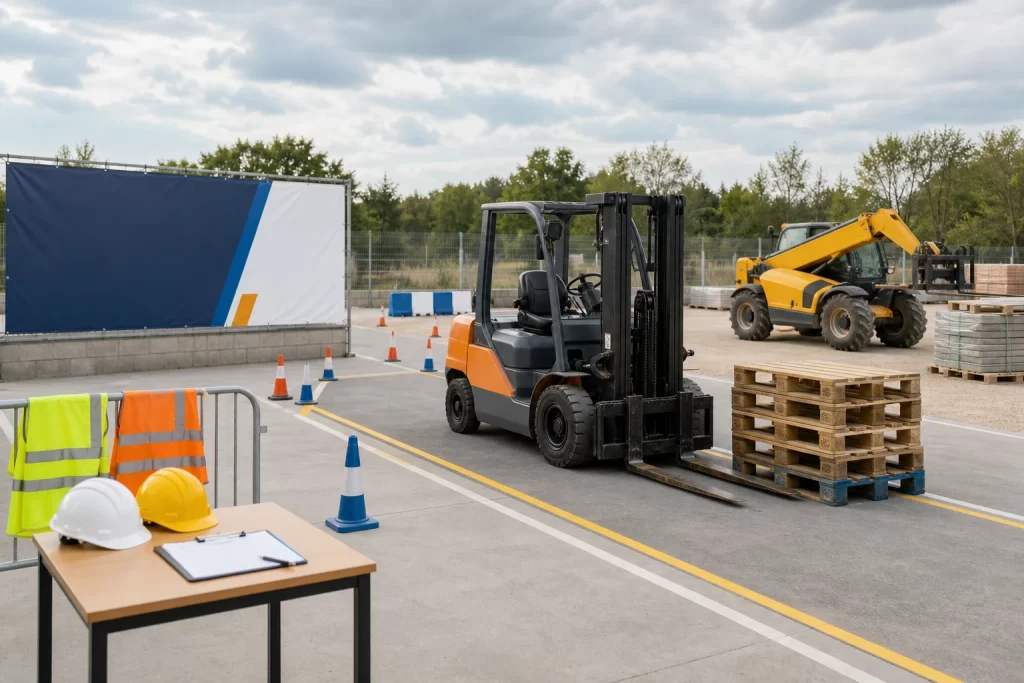
Telehandlers and forklifts both move materials, but they are not the same tool for the same job. Choosing the right operator training matters because the machine, the working area and the load all change the skills your team needs.
If your business is deciding between telehandler and forklift training, the best starting point is not the name of the machine. It is the work your team actually carries out each day, where they carry it out, and what risks they need to manage.
What each machine is designed to do
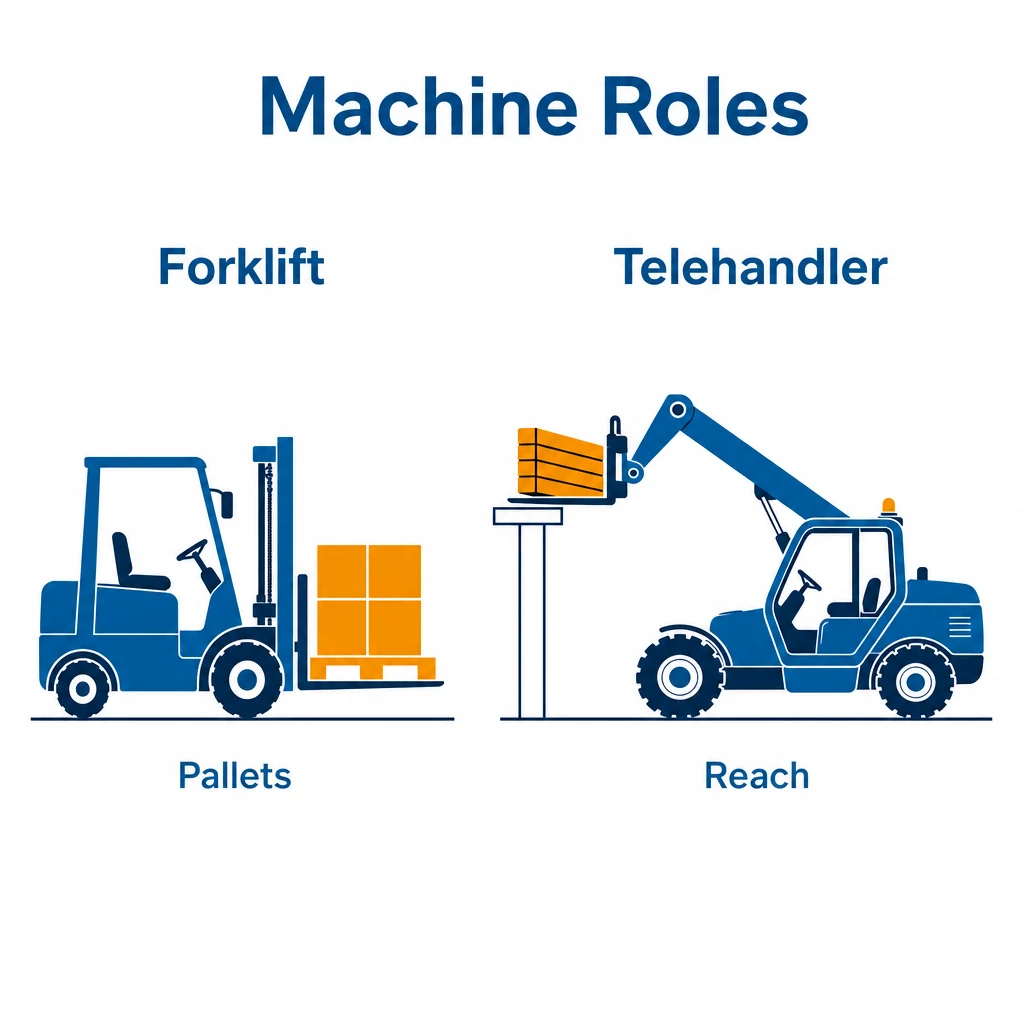
A forklift is designed mainly for lifting and moving loads over shorter distances, usually on firm and level surfaces. Most forklift work involves palletised goods, stillages, containers, packaged materials and other loads that can be lifted using forks. The mast lifts vertically, which makes a forklift a strong choice for yards, stores, loading areas and warehouse style environments where materials need to be moved efficiently and placed accurately.
A telehandler, short for telescopic handler, is built around reach. Its boom extends forwards and upwards, so it can place loads where a standard forklift may not be able to reach. That makes telehandlers common on construction and industrial sites where materials may need to be moved across uneven ground, lifted to a raised working area or placed over an obstacle.
The important difference is control. A forklift operator is mainly managing a mast, forks, steering, stability and load position in a compact working area. A telehandler operator must also manage boom extension, boom angle, changing load radius and the effect these have on stability. That extra reach is useful, but it changes the way the machine behaves.
Where forklifts tend to fit best
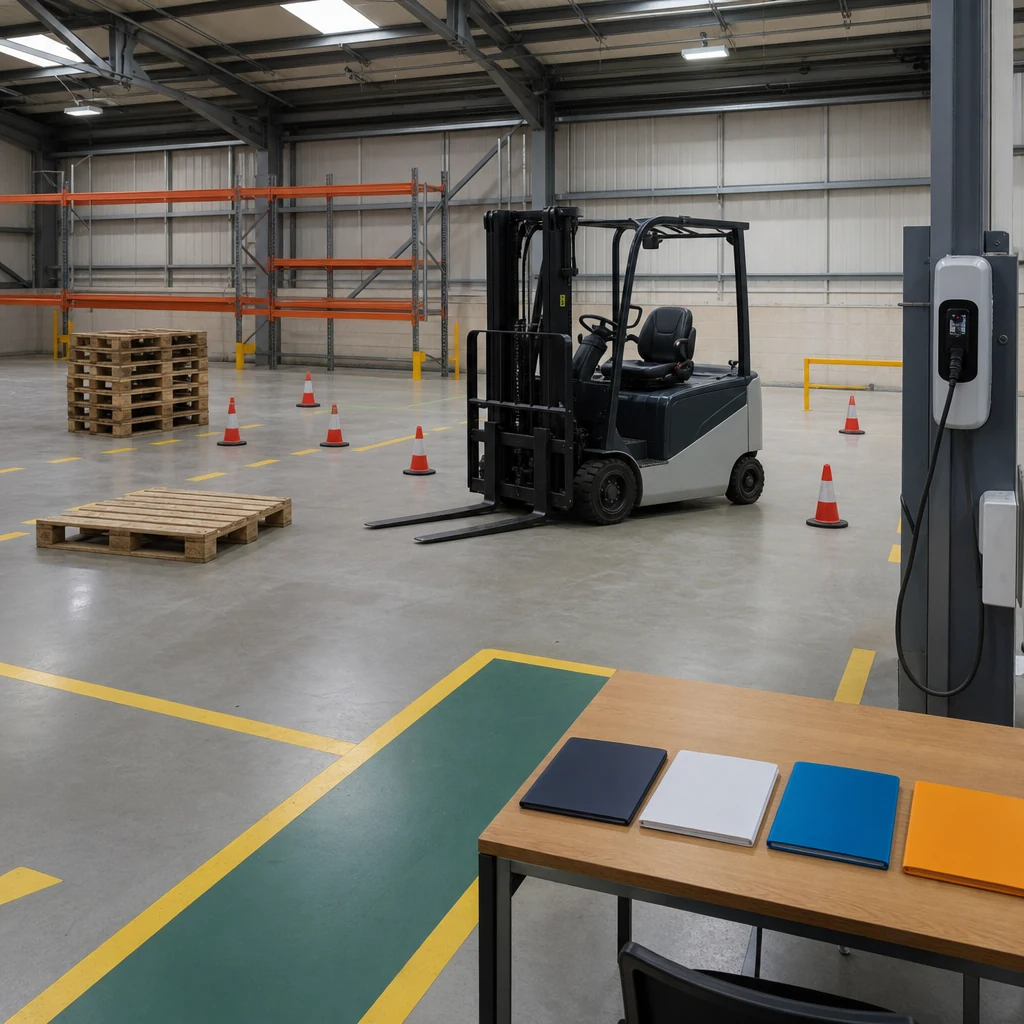
Forklifts are usually the better option where the task is repeated, the load is predictable and the working area is controlled. They are well suited to moving goods from a delivery point to storage, loading and unloading vehicles, stacking pallets, feeding production areas and keeping materials moving around a site or premises.
If your team mainly handles palletised materials, a forklift may be the most practical training choice. It gives operators the skills to lift, travel, turn, stack and place loads safely while managing pedestrians, other vehicles, restricted spaces and loading areas. For a broader introduction to typical uses, CPN Training has a helpful guide on what a forklift is used for.
Forklift training is also relevant when staff only use the truck for part of their role. Occasional use still needs proper competence. The risks do not disappear because the task is brief. If someone is expected to operate a forklift, even for simple movements, they should have suitable training, clear authorisation and an understanding of the site rules that apply.
Businesses arranging forklift training should think about the type of truck being used, the workplace layout, the loads being handled and the level of operator experience. A new operator, an experienced operator and someone returning after a gap may all need different support.
Where telehandlers tend to fit best
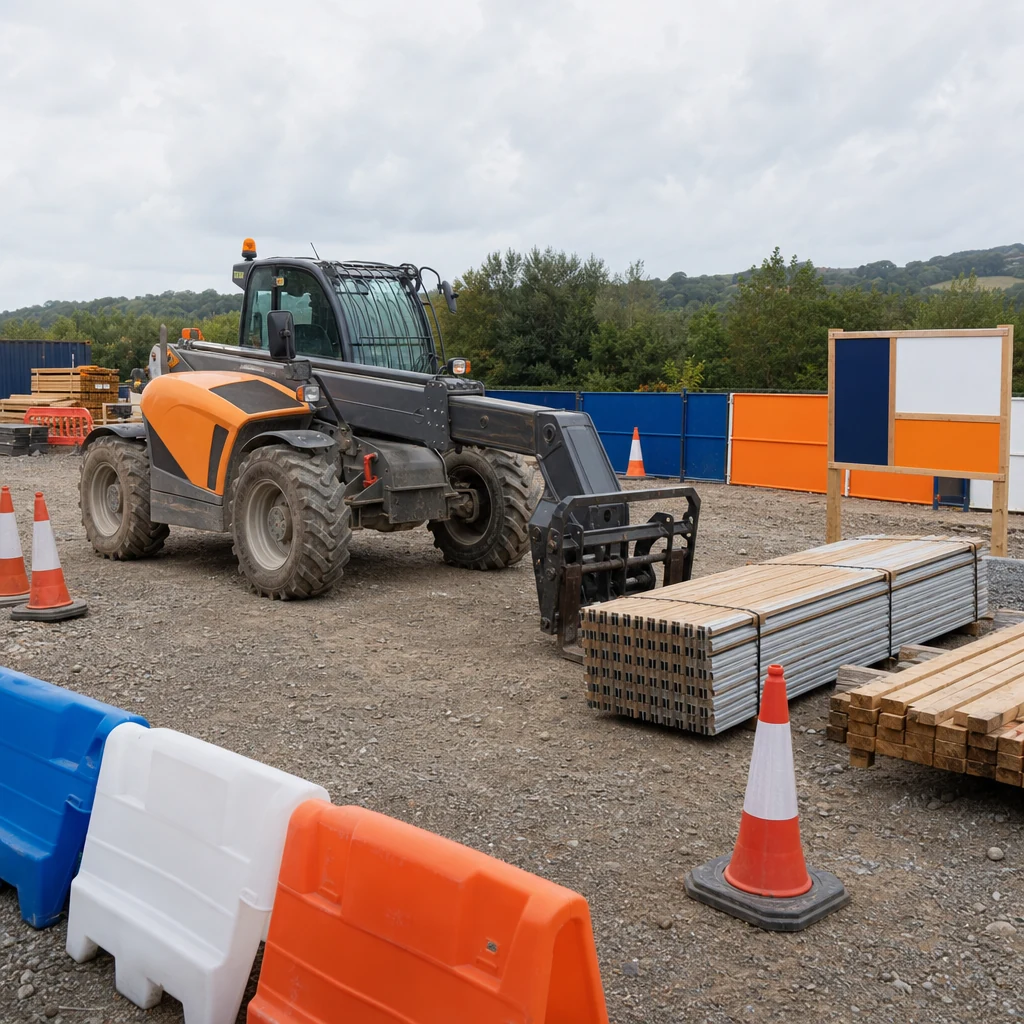
Telehandlers are often chosen where reach, height and site conditions are bigger factors. They can be useful for moving materials around a construction site, placing loads at height, supporting trades with material delivery and reaching areas that a standard forklift cannot serve safely or practically.
They are not simply forklifts with longer arms. The extended boom changes the stability of the machine, especially when lifting higher, reaching further or handling heavier loads. Operators need to understand the load chart, boom position, ground conditions, exclusion zones, visibility and how the machine responds when the load moves away from the body of the vehicle.
Telehandler training is usually the better fit if your team needs to place loads onto raised platforms, move materials over unfinished ground or operate in changing site conditions. It may also be relevant where attachments are used, although training and authorisation should match the attachment, the task and the machine involved.
If your work is based on a live construction environment, operator training should sit alongside wider site safety awareness. A team that understands traffic routes, segregation, ground conditions and lifting risks will make better decisions around moving plant and materials. CPN Training also covers wider construction site safety basics, which can help businesses think beyond the operator seat.
Why training should match the machine and the task
The safest answer is rarely to train everyone on whatever machine is available. Training should match the equipment your business uses and the tasks your people are expected to carry out. A person trained on one type of lift truck should not assume they are ready to operate a different machine without suitable instruction, assessment and authorisation.
There are several reasons for this. Different machines have different controls, blind spots, stability limits, inspection points and operating techniques. The working environment also matters. A controlled storage area is very different from an active construction site with changing routes, uneven surfaces, temporary works, pedestrians and deliveries arriving throughout the day.
A good training decision should consider:
- The exact machine or machines your team will operate
- The types of loads they will lift and move
- The surfaces, slopes and spaces they will work in
- Whether the task involves height, reach or tight manoeuvring
- The experience level of each operator
- Any site or contractor requirements for proof of competence
It is also worth separating operator training from general familiarisation. Familiarisation can help someone understand a particular model, control layout or site process, but it is not a substitute for proper operator training where that is needed. Businesses should keep records clear, review competence over time and arrange refresher training where roles, equipment or working conditions change.
How to choose the right training for your team
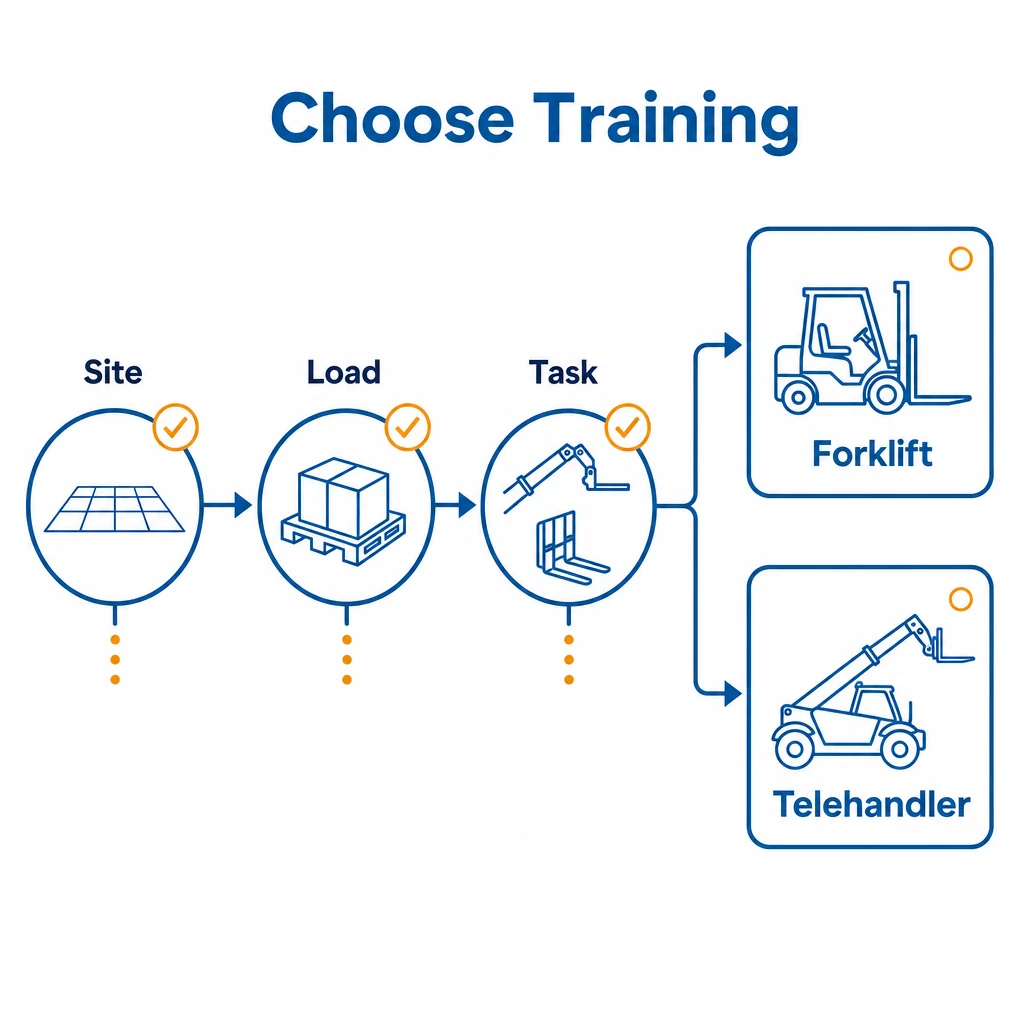
Start by mapping the work. If your team mainly moves palletised goods across firm surfaces, loads and unloads vehicles, stacks materials or works in a controlled handling area, forklift training is likely to be the better starting point. If your team needs reach, height and operation around changing ground conditions, telehandler training may be more appropriate.
For some businesses, the answer is both. A forklift may handle storage, delivery and internal movement, while a telehandler supports site material placement. In that case, training should be planned by role. Not every person needs every category. The aim is to give each operator the competence they need for their actual duties.
It helps to ask a few practical questions before booking training:
- What machine does the operator need to use next week, not in theory?
- Will they work indoors, outdoors or across both?
- Are loads mostly palletised, loose, awkward or placed at height?
- Is the operating area controlled, congested or changing?
- Does the site require a particular card, certificate or recognised route?
- Will the operator need novice, experienced, conversion or refresher training?
If the decision is about forklifts specifically, the guide on whether forklift operators need training is a useful next step. It explains why proper training is important even when the task seems familiar.
The best training choice is the one that gives your team confidence, practical skill and a clear understanding of their limits. A trained operator should know how to use the machine, but also when to stop, ask, reassess the load or change the plan.
- Forklifts are usually best for pallet movement, stacking, loading and controlled handling areas.
- Telehandlers are better suited to tasks that need reach, height and operation in changing site conditions.
- Training should match the machine type, the load, the workplace and the operator role.
- A forklift trained operator should not assume they are competent to use a telehandler without suitable training.
- Some businesses need both types of training, but not every team member needs every category.
Frequently asked questions
Can a forklift operator drive a telehandler?
Not automatically. The machines behave differently and the risks are different, especially because a telehandler boom changes reach, height and stability. Operators should only use equipment they have been suitably trained and authorised to operate.
Is forklift training enough for construction work?
It depends on the work. Forklift training may be suitable where the task involves forklift use in a controlled area. If the role involves site movement, changing ground conditions or placing loads at height with a telehandler, different training may be needed.
Which training should a new operator take first?
Choose the training that matches the machine they will actually use. If their role starts with loading, unloading and pallet movement, forklift training is likely to come first. If their role involves reach and height on site, telehandler training may be the right starting point.
Do experienced operators still need training?
Experience is valuable, but it should be checked against the machine, task and site. An experienced operator may need refresher, conversion or site familiarisation training, especially if equipment, attachments or working conditions have changed.
Need help choosing the right course?
CPN Training can help you match operator training to the machines, tasks and working environment your team deals with every day.