Manual handling is part of ordinary work in many workplaces, but ordinary does not mean harmless. Lifting, carrying, pushing, pulling and lowering can all lead to pain or injury when the task is poorly planned or repeated in the wrong way.
The problem is rarely one dramatic lift. More often, injuries come from small mistakes that become habits: twisting while carrying, rushing a load, ignoring a poor grip or trying to move something alone when help is needed.
Why manual handling injuries happen
Manual handling injuries usually happen when the demands of the task exceed what the body can safely manage at that moment. The load may be too heavy, unstable, awkward to grip or difficult to see around. The route may be cluttered. The worker may be tired, under pressure or unsure of the safest method.
Good practice starts before anyone bends down to lift. Employers should avoid hazardous manual handling where practical, assess tasks that cannot be avoided, and reduce the risk as far as reasonably practical. Workers also need clear instruction, enough time and suitable equipment for the task.
That is why manual handling should be treated as part of wider health and safety training, rather than as a quick reminder to lift with the knees. Technique matters, but so do planning, communication, supervision and the working environment.
Mistake 1: lifting before assessing the task
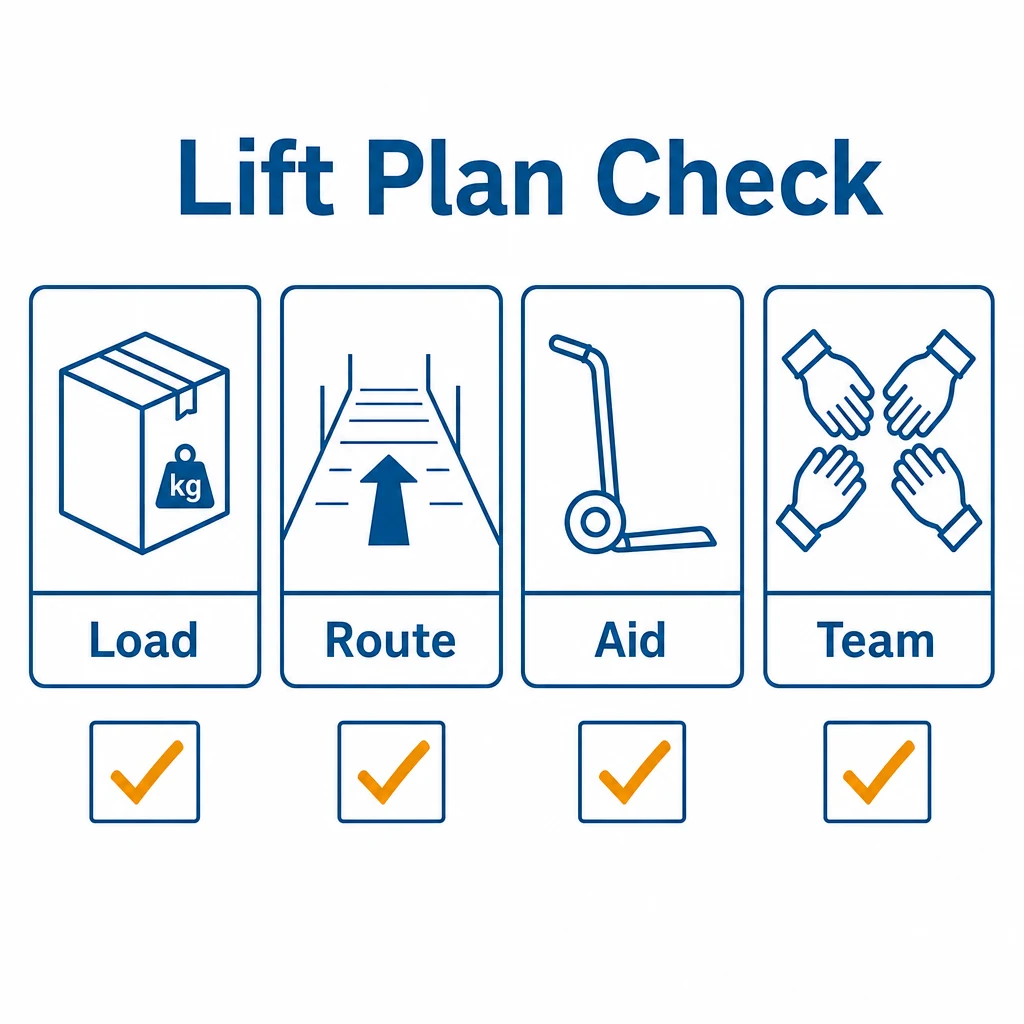
One of the most common mistakes is treating every lift as simple. A box, bag, tool, panel or container might look manageable, but the real risk depends on more than weight alone. Shape, balance, grip, distance, height and the route all change the level of strain.
A quick assessment should ask a few basic questions. Can the lift be avoided? Can the load be split into smaller parts? Is a handling aid available? Is the route clear? Will the worker need to twist, reach, stoop or carry the load for too long?
Skipping this thinking stage can lead to back strain, shoulder injuries, trapped fingers, slips and falls. It can also create secondary risks if the worker cannot see where they are walking or has to step over obstacles while carrying a load.
- Check the weight and stability of the load before moving it.
- Plan where the load will be placed before lifting.
- Clear the route and remove trip hazards first.
- Use a trolley, sack truck, hoist or other suitable aid where it reduces risk.
- Ask for help when the size or shape makes the load difficult to control.
Mistake 2: twisting, reaching and lifting from poor positions
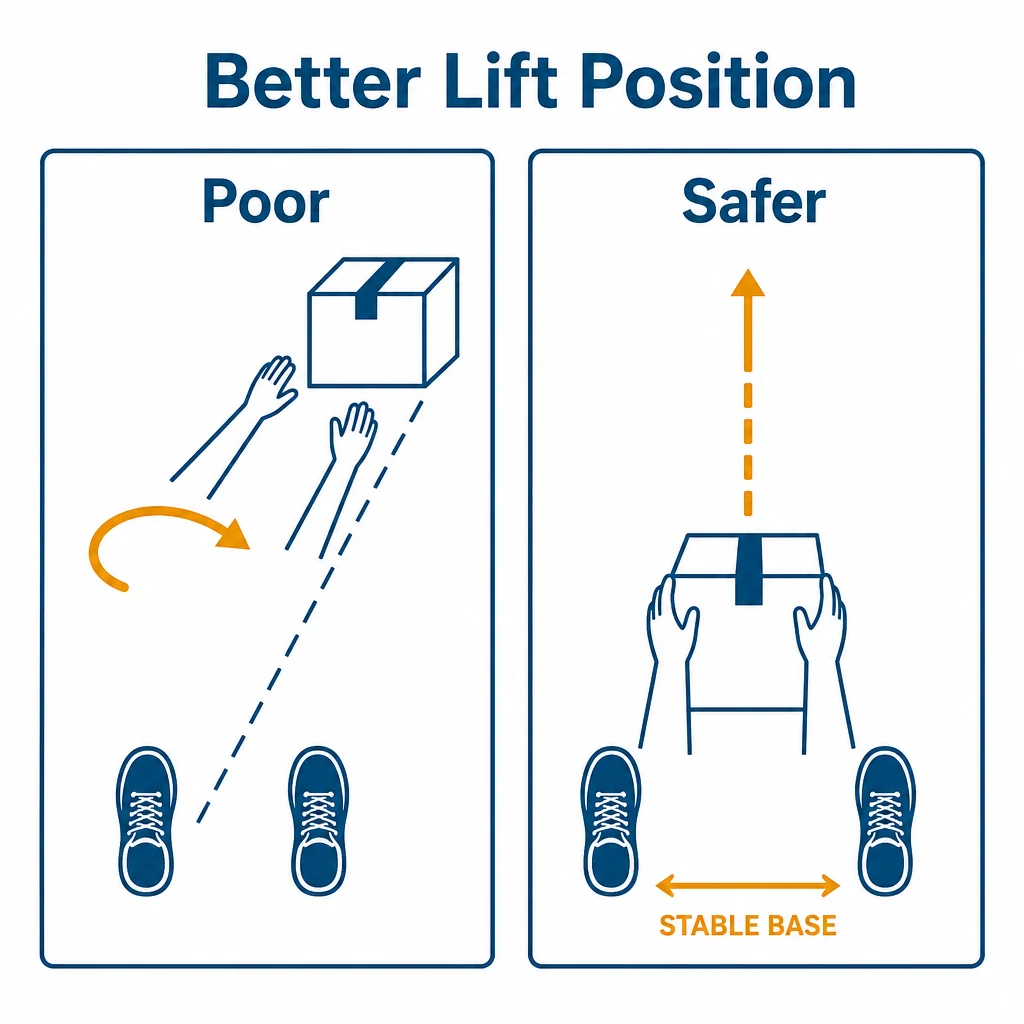
Many manual handling injuries come from awkward posture. Twisting through the spine while holding a load, reaching away from the body, lifting from floor level, or placing items above shoulder height all increase strain. The heavier or more frequent the task, the greater the risk becomes.
A safer lift keeps the load close to the body, uses a stable stance and avoids sudden movement. The worker should face the direction of travel and move the feet to turn, rather than twisting the upper body while the load is held.
Good technique is not about one perfect classroom demonstration. It is about applying the right principles to real tasks. A worker moving light items repeatedly may need different controls from someone carrying a bulky object over an uneven route.
- Get close to the load before lifting.
- Place feet in a stable position, with one foot slightly forward if useful.
- Keep the load close and avoid holding it at arm length.
- Turn by moving the feet, not by twisting the back.
- Put the load down securely, then adjust its final position if needed.
Mistake 3: ignoring fatigue, repetition and pace
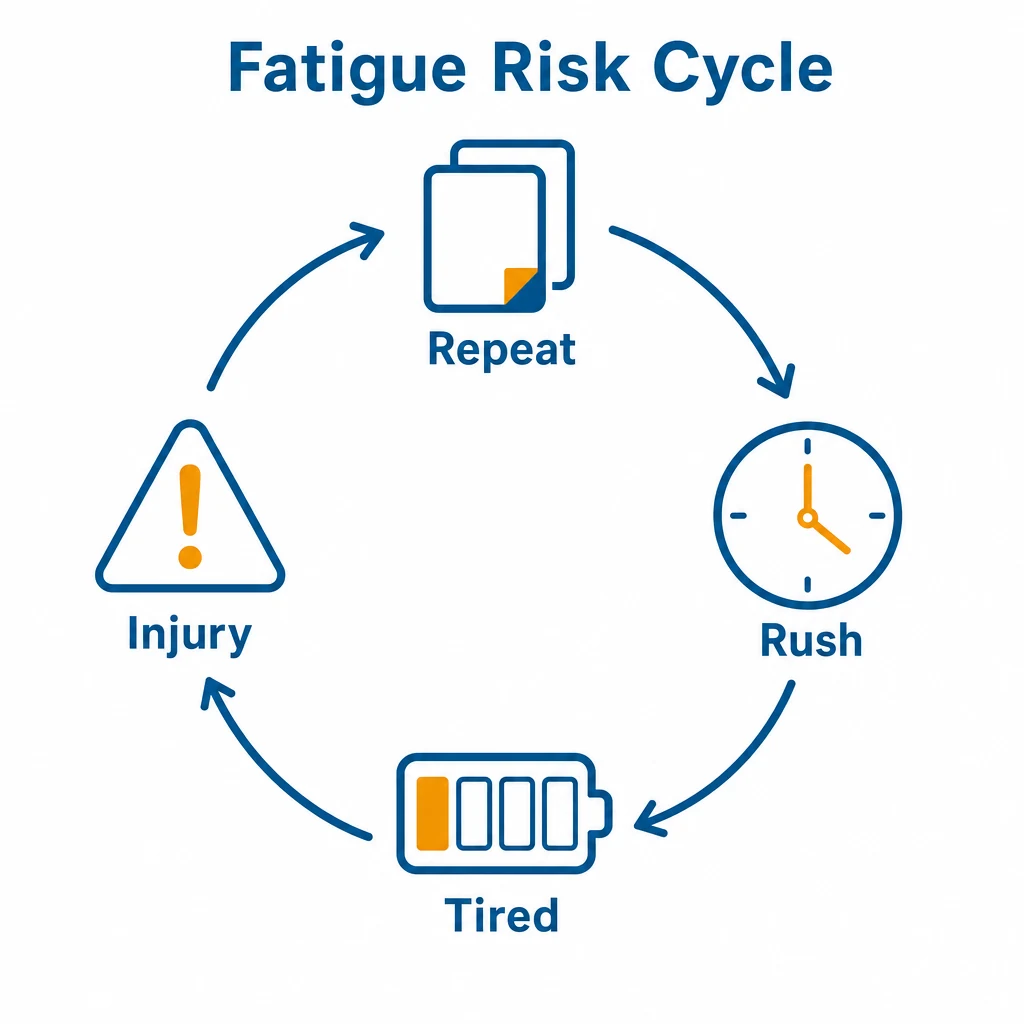
A lift that feels easy at the start of a shift may feel very different after repeated handling. Fatigue reduces concentration, grip strength and coordination. It also makes people more likely to rush or take shortcuts, especially when work is busy.
Repetition can be just as important as load weight. Frequent bending, carrying, pushing or pulling can build strain in the back, shoulders, wrists, elbows and knees. Workers may not notice the harm immediately, which is why early reporting of discomfort matters.
Managers and supervisors can reduce risk by planning work so that demanding handling tasks are spread sensibly, rotated where appropriate and supported with aids. If workload pressure is encouraging unsafe shortcuts, it may also be worth looking at wider working conditions and practical ways of managing workplace stress.
Breaks, task rotation and realistic planning help people stay alert, keep good technique and make better decisions.
Mistake 4: poor communication during team handling
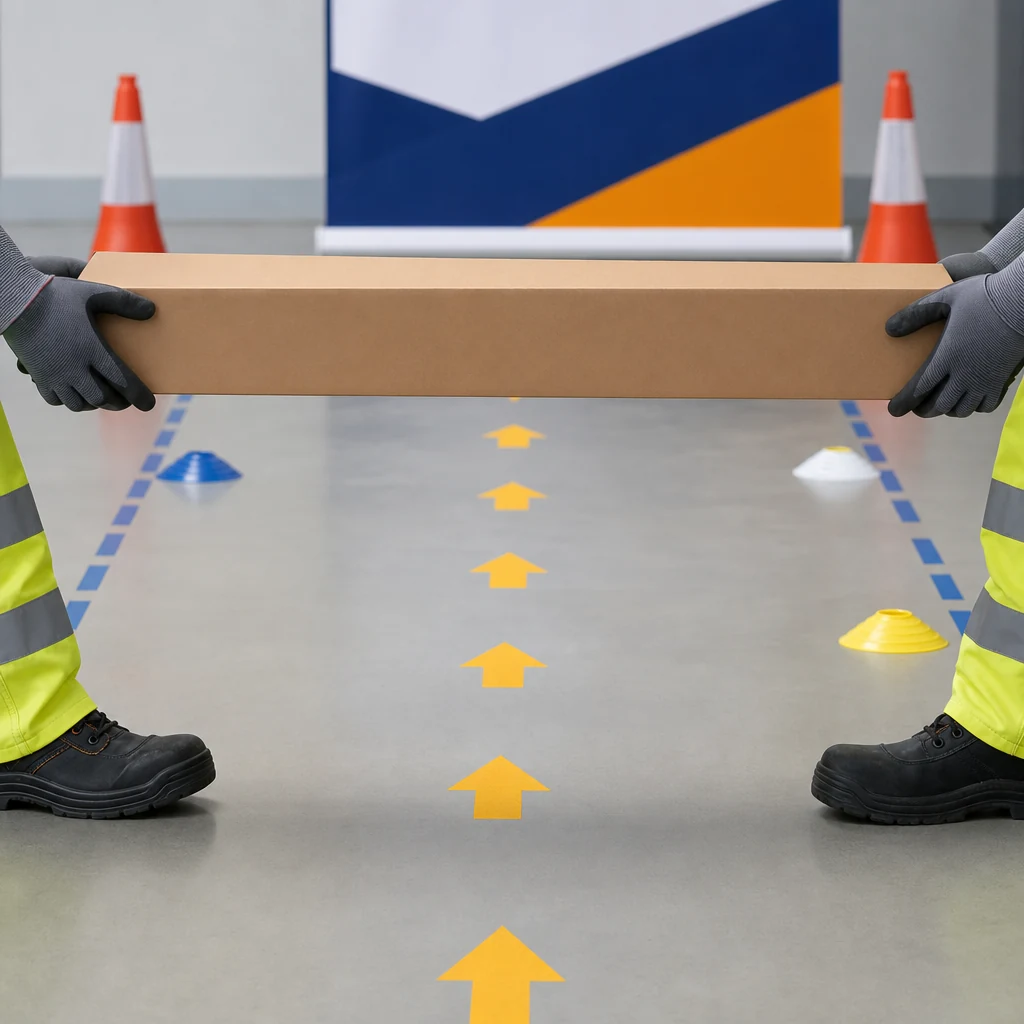
Team handling can reduce strain, but only when it is organised properly. Two people lifting the same load without agreeing who leads, when to lift, where to walk and where to place it can create new risks.
Common problems include one person taking more weight than expected, lifting before the other person is ready, walking at different speeds, or losing balance when the load is placed down. These mistakes can cause muscle strain, crushed fingers, impact injuries and falls.
Before a team lift, everyone involved should understand the plan. One person should give simple instructions. The route should be clear. The load should be shared fairly, and anyone who cannot keep a safe grip or posture should stop the lift.
- Agree the route and final position before lifting.
- Choose one person to coordinate the lift.
- Use clear signals such as ready, lift, move and lower.
- Keep the pace steady and avoid sudden changes of direction.
- Stop safely if grip, balance or visibility becomes a problem.
Mistake 5: treating training as a one off exercise
Manual handling training should be practical and relevant to the tasks people actually do. Generic advice has limited value if workers then return to awkward storage areas, unsuitable routes or loads that cannot be gripped safely.
Effective training helps people understand risk factors, practise good technique and recognise when a task needs a different method. It should also make reporting easier. Workers need to feel able to say when a load is unsuitable, when equipment is missing, or when pain suggests a task should be reviewed.
The best results come when training is supported by supervision and sensible workplace controls. That might mean changing storage heights, improving access, reducing carry distances, providing handling aids, or reviewing how deliveries and materials are organised.
CPN Training helps organisations build practical confidence through clear instruction and workplace focused learning, with the aim of safer decisions, better technique and fewer avoidable injuries.
- Manual handling risk is affected by weight, shape, grip, posture, distance, pace and the working environment.
- Most injuries are preventable when tasks are assessed before lifting starts.
- Good technique works best when supported by clear routes, suitable equipment and enough time.
- Team handling needs communication, one clear lead and a shared plan.
- Training should reflect the real tasks workers carry out, not just a generic lifting demonstration.
Frequently asked questions
What counts as manual handling at work?
Manual handling includes lifting, lowering, carrying, pushing, pulling, moving or supporting a load by hand or bodily force. The load could be an object, material, tool, container or anything else that needs physical handling.
Is there a maximum weight someone can lift at work?
There is no single safe weight that applies to every person and every task. Risk depends on the load, posture, grip, distance, frequency, environment and the capability of the worker. That is why assessment is needed rather than relying on a fixed number.
What injuries can poor manual handling cause?
Poor manual handling can cause back pain, muscle strains, shoulder injuries, wrist and elbow problems, knee strain, trapped fingers, cuts, bruises and injuries from slips, trips or dropped loads.
How often should manual handling training be refreshed?
Training should be reviewed when tasks, equipment, routes or risks change, and whenever observations or incident reports suggest that people need further support. Refresher training is most useful when it is tied to real workplace practice.
Build safer manual handling habits
If your team lifts, carries, pushes or pulls as part of everyday work, CPN Training can help you strengthen practical safety knowledge and reduce avoidable risk.