Skilled worker cards are often seen as a simple site access requirement, but the qualification behind the card matters just as much as the card itself. A construction NVQ helps show that a worker can carry out their trade safely, competently and consistently in real working conditions.
For many people, the NVQ is the bridge between experience on site and formal recognition of that experience. It gives assessors structured evidence of what you already do well, and it can support progression towards the CSCS card route that matches your occupation and level of responsibility.
What a construction NVQ proves
A construction NVQ is not designed to test someone in an artificial classroom setting. It is a work based qualification that looks at how a person performs their role in practice. That matters because construction competence is not only about knowing the right answer. It is about applying safe methods, using equipment correctly, communicating with others, following instructions and producing work to the required standard.
For a skilled worker card, the evidence behind the qualification gives confidence that the holder has been assessed against recognised occupational standards. Depending on the occupation and card type, the NVQ level required may vary, but the principle is the same. The qualification should match the work the person actually carries out.
This is why an NVQ can be valuable for experienced workers who have learnt their trade through years on site. It allows them to turn practical experience into a recognised qualification without pretending that every competent worker has followed the same route into the industry.
How NVQ evidence connects to CSCS progression
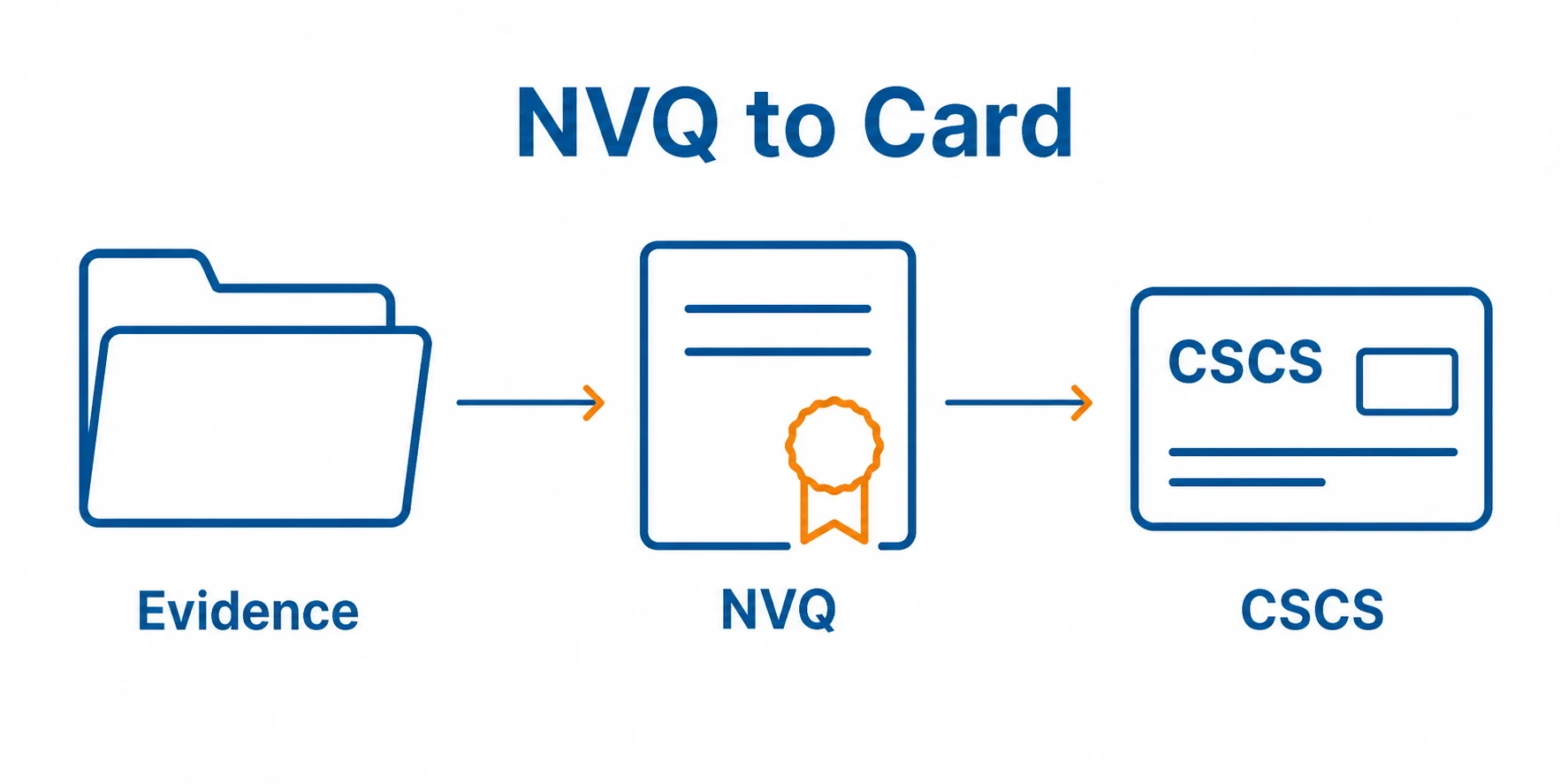
CSCS progression is built around the idea that the card should reflect the worker’s role and competence. An NVQ gives structure to that process because it creates a clear evidence trail. Instead of relying only on job titles or informal experience, the assessor looks for proof that the learner can meet the standards for their occupation.
Evidence may include professional discussions, observations, witness testimony, photographs of completed work where suitable, job records, method statements, risk assessments, toolbox talk records or other workplace documents. The exact evidence depends on the qualification and the type of work being assessed.
This evidence matters because it connects day to day work with recognised outcomes. For example, someone applying for a blue skilled worker card will usually need to show competence in a specific trade or occupation. Someone aiming for a higher level card may need evidence that reflects a more advanced role, greater responsibility or supervision duties. The construction NVQ assessment route helps organise that evidence so the qualification can support the correct card pathway.
If you are unsure how cards fit into the wider system, CPN Training’s guide to what a CSCS card is gives useful background without replacing advice on the qualification itself.
Why experienced workers should not overlook the NVQ
Experienced workers sometimes assume that an NVQ is only useful for people who are new to construction. In practice, it is often most useful for those who already have strong practical ability but need that competence recognised formally.
Many skilled tradespeople can demonstrate safe working habits, sound judgement and consistent workmanship every day. The issue is that informal experience is not always enough when a card application needs a recognised qualification. An NVQ helps close that gap by turning real work into assessed evidence.
That does not mean starting from scratch. A good assessment process should identify what evidence is already available, what still needs to be gathered and how the learner can show competence clearly. For many people, the process is about organising and presenting what they already do as part of their normal role.
There is also a professional benefit. Holding the right qualification can make conversations with employers, principal contractors and site managers simpler because it shows that competence has been assessed against an accepted standard. It also supports safer working because the assessment process encourages people to reflect on how they plan, complete and check their work.
What assessors look for during an NVQ
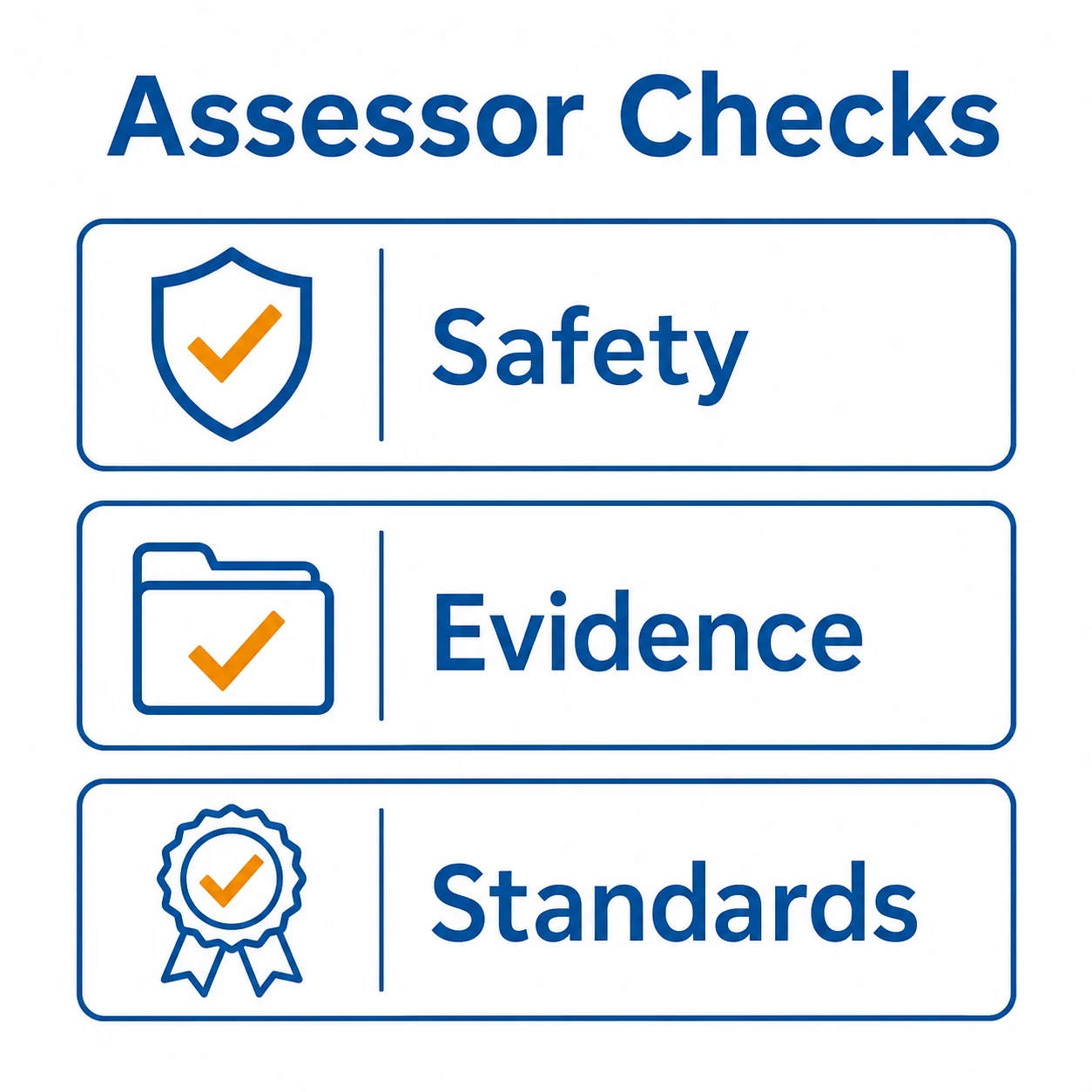
An assessor is not looking for perfect paperwork for its own sake. They are looking for reliable evidence that the learner meets the requirements of the qualification. The strongest portfolios tend to show a clear link between the learner’s actual job role, the standards being assessed and the evidence provided.
Common areas of focus include how the learner follows site rules, uses personal protective equipment, selects tools or materials, checks work quality, responds to hazards, communicates with colleagues and works within health and safety expectations. For supervisory routes, the assessor may also look at planning, coordinating tasks, briefing others, monitoring work and dealing with changes on site.
Professional discussion can be especially useful because it allows the learner to explain decisions, methods and safety considerations in their own words. This helps the assessor understand not just what happened, but why the learner acted in a particular way.
Preparation helps the assessment run smoothly. Before starting, it is useful to gather examples of recent work, check that job responsibilities match the chosen NVQ and understand what evidence may be acceptable. CPN Training has a practical guide on getting assessment ready before starting your NVQ for learners who want to arrive organised.
Choosing the right NVQ for the card you need
The right NVQ should reflect the worker’s actual occupation, not just the card colour they would like to hold. This is important because the card should match the role being performed on site. If the qualification is too broad, too narrow or not aligned with the work, it may not support the intended progression route.
A sensible starting point is to look at the work carried out most often. What tasks does the worker complete independently? What responsibilities do they hold? Do they supervise others? Are they working in a trade role, an advanced craft role or a management related role? The answers help point towards the correct qualification level and pathway.
It is also worth thinking about future plans. Someone who is moving into supervision may need a different route from someone who wants recognition for an established trade role. The aim is not to choose the quickest sounding option. The aim is to choose the qualification that accurately proves competence for the role.
Questions about getting a card without the right qualification are common, but they can distract from the better question, which is what evidence and qualification route best reflects the work being done. For more context on that specific topic, CPN Training has a separate article on whether you can get a CSCS card without an NVQ.
How CPN Training can support the assessment process

CPN Training supports learners who need clear guidance through construction NVQ assessment. The value of support is not only in explaining the qualification, but in helping learners understand what evidence is needed and how the assessment process works.
A professional assessment route should feel organised and practical. Learners should know which qualification they are working towards, what evidence they need to provide, how assessor contact will work and what happens if extra evidence is required. That clarity helps people focus on showing competence instead of guessing what the process expects.
For employers, NVQ assessment can also help create a clearer picture of workforce competence. It supports workers who already perform well, helps align qualifications with site roles and can form part of a broader approach to health and safety training, site awareness and ongoing skills development.
The most useful outcome is simple. The learner gains a recognised qualification that reflects their real role, and that qualification can support the skilled worker card route that fits their occupation.
- A construction NVQ helps turn practical site experience into recognised evidence of competence.
- The right qualification should match the worker’s actual occupation and level of responsibility.
- NVQ evidence can include workplace observation, professional discussion, documents and witness testimony.
- Good preparation helps learners understand what evidence they already have and what still needs to be gathered.
- CPN Training can support learners through a clear and practical construction NVQ assessment process.
Frequently asked questions
Do I need an NVQ for a skilled worker card?
For many skilled worker card routes, a recognised construction qualification such as an NVQ is an important requirement. The right qualification depends on the occupation and the card being applied for.
Is an NVQ only for people new to construction?
No. Many experienced workers complete an NVQ because they already have the practical skills but need formal recognition of their competence for card progression or role requirements.
What evidence do I need for a construction NVQ?
Evidence can include workplace observations, professional discussions, witness statements, job records, risk assessments, method statements and examples of completed work where suitable.
How do I know which NVQ level is right for me?
The correct level depends on the work you carry out, how much responsibility you have and the card route you are aiming for. An assessor or training provider can help match the qualification to your role.
Start with the right assessment route
If you want your skills recognised properly, CPN Training can help you understand the NVQ assessment process and the evidence you need to prepare.