
If you operate, manage or hire forklift operators, you have probably heard people talk about an AITT certificate or a forklift licence. The wording can be confusing, especially when employers need clear evidence that training has been completed properly.
This guide explains what an AITT certificate is, what it does and does not prove, and what records employers should keep after forklift training. It is written for operators, supervisors, site managers and anyone responsible for workplace transport safety.
What an AITT certificate means
AITT stands for the Association of Industrial Truck Trainers. It is an accrediting body for workplace transport and material handling equipment training. In simple terms, AITT sets training standards, audits approved training providers and helps employers identify training that has been delivered to a recognised framework.
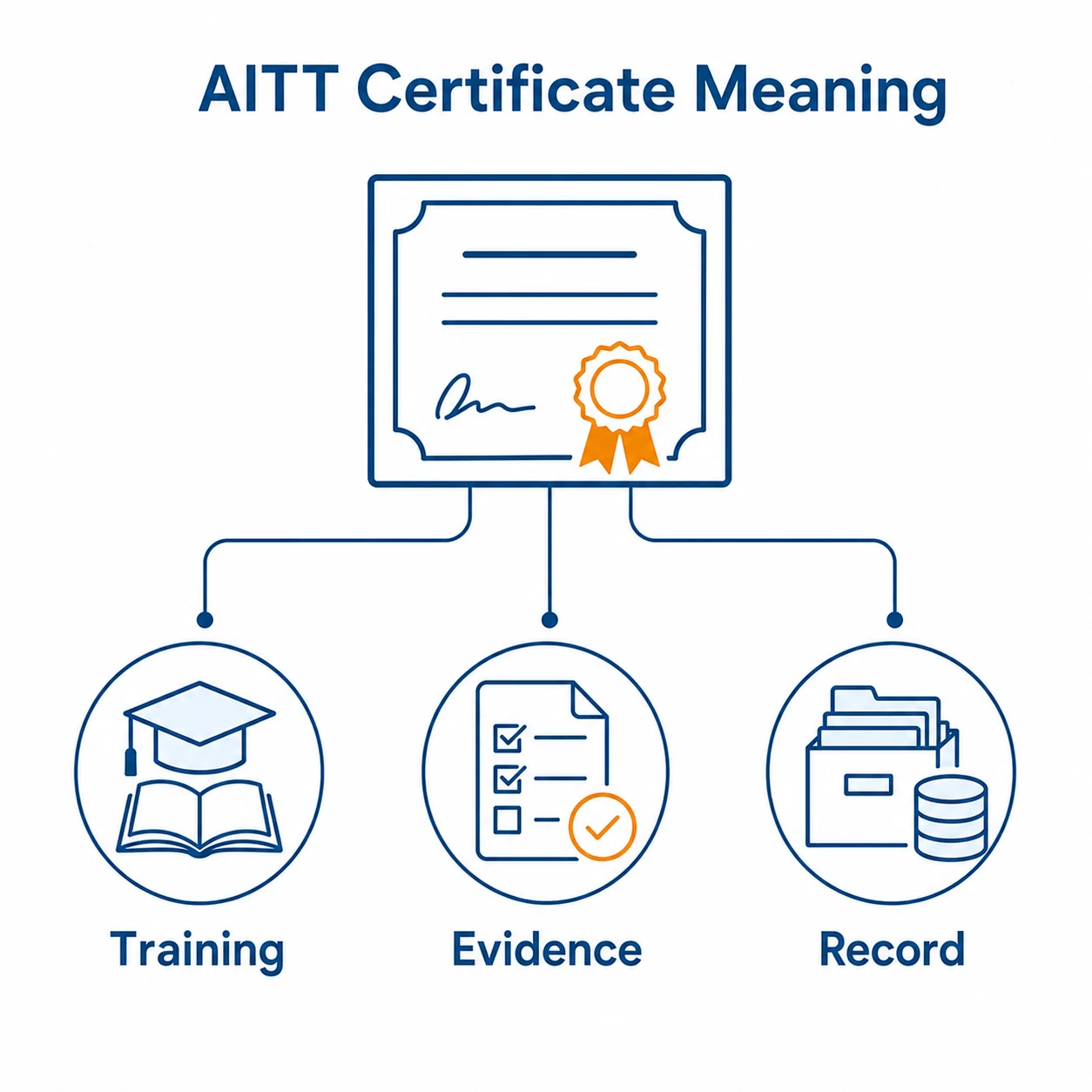
An AITT certificate is evidence that a learner has completed training and assessment through an AITT accredited route. Depending on the course, the certificate may relate to basic operator training, conversion training, refresher training or another recognised workplace transport category.
A certificate should usually show the operator name, the training provider, the instructor or assessor details, the truck category, the training dates, the assessment result and any registration or verification details. AITT also operates ACORNS, its operator registration scheme, which can be used to check AITT accredited training records through the AITT ACORNS scheme.
The important point is that the certificate is not just a piece of paper. It forms part of the evidence trail that shows the operator has been trained and assessed against an organised standard. For employers, that evidence matters when allocating work, reviewing competence and demonstrating that forklift safety has been taken seriously.
Is an AITT certificate the same as a forklift licence
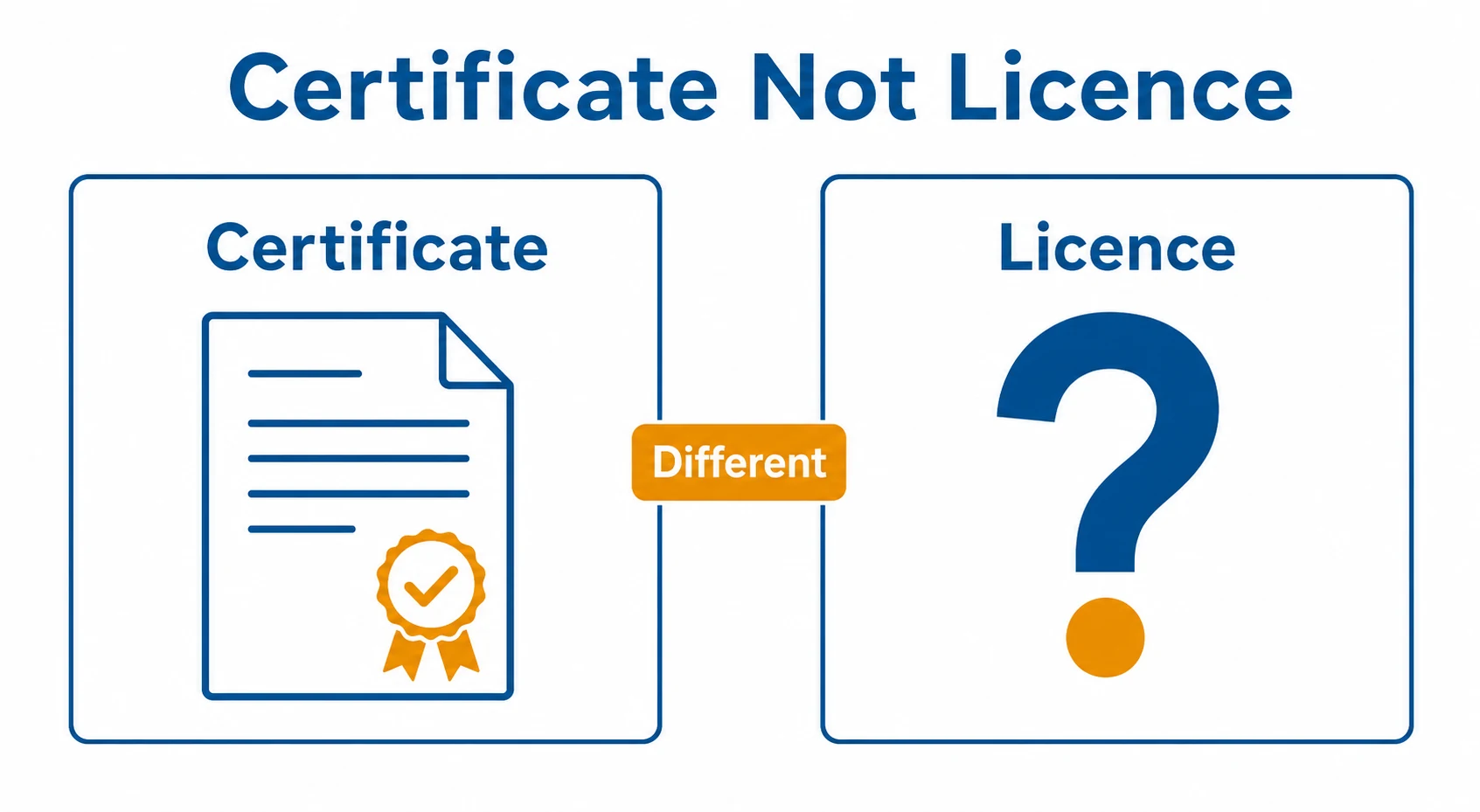
No. In everyday conversation, people often ask whether they need a licence to drive a forklift truck, but a forklift certificate is not the same as a road driving licence. There is no single universal forklift licence that allows someone to operate any forklift in any workplace.
What matters is whether the person has received suitable training for the type of truck they will use, the work they will do and the environment they will work in. The Health and Safety Executive explains that lift truck training should include basic training, specific job training and familiarisation training. You can see the official outline in HSE lift truck training guidance.
Basic training covers the core skills and safety knowledge needed to operate the truck correctly. Specific job training deals with the particular truck, attachments, loads and operating conditions. Familiarisation training then applies that learning under normal workplace conditions, under close supervision.
This is why an operator with an AITT certificate may still need further workplace instruction before being authorised to use a forklift in a new setting. A certificate can show that formal training has been completed, but the employer still has to decide whether the person is competent for the actual task and working environment.
For a fuller explanation of the common licence question, CPN Training has also covered whether you need training to use a forklift truck.
Why recognised training evidence matters
Forklifts are practical, useful pieces of workplace equipment, but they also carry serious risk when used without the right training and supervision. Operators need to understand stability, load handling, travel speed, steering behaviour, visibility, slopes, pedestrians, racking, charging or refuelling arrangements and safe shutdown.
Recognised training evidence helps remove guesswork. It gives employers a clearer basis for deciding who can operate which truck, what extra instruction may be needed and when refresher training should be considered. It also helps operators show future employers that their training was structured, assessed and recorded.
For employers, good evidence supports health and safety management. If there is an incident, near miss, insurance query or internal audit, a verbal claim that someone was trained is much weaker than a clear training record backed by a certificate, assessment result and workplace authorisation.
Recognised training also creates consistency. AITT accredited training should follow an approved syllabus and be delivered by instructors who meet the required standard. That does not remove the employer’s duty to manage safety, but it provides a stronger starting point than informal instruction alone.
Operators benefit too. A certificate can make it easier to explain what training they have completed, which truck category they were assessed on and whether the training was novice, experienced operator, conversion or refresher training. That clarity is helpful during recruitment, role changes and site induction.
What employers should keep on record

After forklift training, employers should keep more than a copy of the certificate. The aim is to build a simple, reliable record that shows what training took place, who delivered it, what was assessed and what the operator is authorised to do.
Useful records may include:
- The operator’s full name and role.
- The type and category of lift truck covered by the training.
- The name of the training provider and instructor.
- The date or dates of training and assessment.
- The certificate number or registration details, where supplied.
- Copies of theory and practical assessment results.
- Any course paperwork that confirms the syllabus or training route.
- Evidence of familiarisation training in the workplace.
- A written record of the employer’s authorisation for the operator to use specific equipment.
- Notes of any restrictions, further training needs or supervision requirements.
These records should be easy to find when a supervisor, manager, auditor or safety adviser needs them. They should also be updated when an operator changes truck type, moves to different duties, returns after a long absence or receives refresher training.
A neat record system also helps with workforce planning. Employers can see which operators are trained on which equipment, where gaps exist and when reviews are due. This avoids rushed decisions and helps keep training part of normal operations rather than something only considered after a problem.
When an AITT certificate should be checked or refreshed
An AITT certificate should be checked whenever an operator joins a business, changes role, presents previous training evidence or is being allocated forklift duties for the first time. The employer should confirm that the certificate matches the truck type and task, that the training provider details are clear and that the record looks genuine.
Where a certificate includes ACORNS details, those can help verify the AITT record. If anything is unclear, it is sensible to contact the training provider or accrediting body before authorising the person to operate.
Refresher training is not just about a date on a certificate. Employers should monitor how operators work in practice. Refresher training may be needed after unsafe operating, an accident, a near miss, a change in equipment, a change in working conditions or a period away from forklift duties. Many employers also set planned review intervals so training stays current and records remain tidy.
Operators should not see refresher training as a punishment. It is a useful way to sharpen habits, correct drift and rebuild confidence. Forklift work often becomes routine, and routine is exactly where small shortcuts can creep in.
For broader safe operating principles, CPN Training’s guide to forklift training and key operator skills is a helpful companion to this article.
Practical steps for operators and employers
If you are an operator, keep your certificate somewhere safe and make sure you understand what it covers. Check the truck category, training date and any limitations. If you are applying for a role, be honest about the type of truck you trained on and the kind of work you have done since.
If you are an employer, treat certificates as part of a bigger competence picture. Ask to see original or verifiable evidence, check whether the training matches your equipment, provide familiarisation training and issue clear written authorisation before the operator starts work.
It is also worth making forklift competence part of wider workplace safety conversations. Good operators understand daily checks, safe load handling, pedestrian awareness, reporting defects and stopping work when something is not right. For maintenance and safety routines, CPN Training has a practical guide to forklift safety and maintenance.
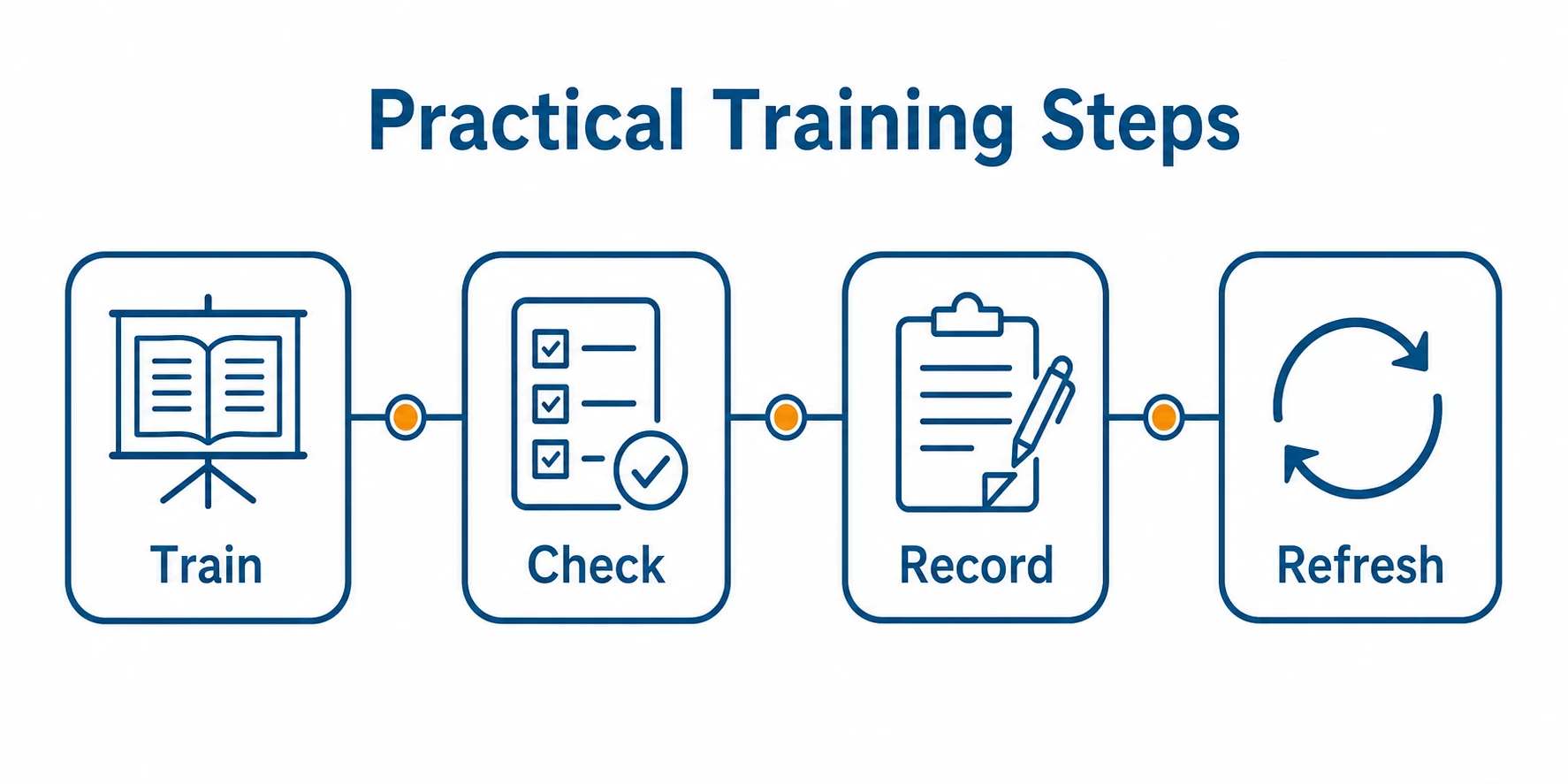
The best approach is simple: train properly, record clearly, supervise sensibly and review competence when work changes. An AITT certificate can be a valuable part of that process, but it works best when it sits alongside active management and sensible on site control.
- An AITT certificate is evidence of accredited forklift training and assessment, not a universal forklift licence.
- Employers still need to confirm that an operator is competent for the specific truck, task and workplace.
- Good records should include certificates, assessment evidence, familiarisation training and written authorisation.
- Certificates should be checked during onboarding, role changes and training reviews.
- Refresher training helps maintain safe habits and should be considered when risks, equipment or performance change.
Frequently asked questions
Do I need a licence to drive a forklift truck?
There is no single universal forklift licence, but you do need suitable training and employer authorisation before operating a forklift at work. A certificate can provide evidence of training, but the employer must still confirm competence for the specific task.
What does an AITT certificate prove?
It shows that the named person completed training and assessment through an AITT accredited route for the stated truck category or course type. Employers should still check that the training matches the equipment and duties involved.
Can I use an old forklift certificate with a new employer?
You can present it as evidence of previous training, but the new employer should verify it, check whether it matches their equipment and provide any workplace specific instruction before authorising you to operate.
How often should forklift training be refreshed?
There is no single fixed interval that suits every workplace. Employers should review competence regularly and consider refresher training after unsafe practice, incidents, changes in equipment, changes in working conditions or time away from forklift duties.
Need clear forklift training guidance?
CPN Training can help operators and employers understand forklift training evidence, certificate records and practical next steps for safer workplace transport.