

A construction safety record is only useful if it can be shown, understood and trusted. When a buyer, principal contractor, insurer or internal manager asks what training has been given, a vague answer will rarely be enough.
Employers need a clear way to prove that workers have received relevant instruction, understood the risks and had the chance to apply what they have learned. Good evidence does not have to be complicated. It does need to be organised, current and linked to the work being carried out.
Why proof of training matters
Health and safety training is not just about attendance. It is about showing that people have been given suitable information, instruction, training and supervision for the tasks they are expected to do. In construction, that may include construction site safety awareness, site induction, PPE use, manual handling, working around plant, emergency arrangements, first aid awareness, mental health awareness and the controls set out in a site safety plan.
Evidence matters because construction work can change quickly. Teams may move between projects, subcontractors may join at short notice and tasks can carry different levels of risk. If records are scattered across inboxes, paper folders and memory, it becomes harder to prove who was trained, when it happened and what was covered.
Clear evidence also helps managers spot gaps before they become problems. A simple review may show that a new starter needs an induction or a supervisor needs extra briefing on a method statement. For a wider view of planning around hazards and controls, CPN Training also has guidance on developing a comprehensive site safety plan.
What good training evidence should include
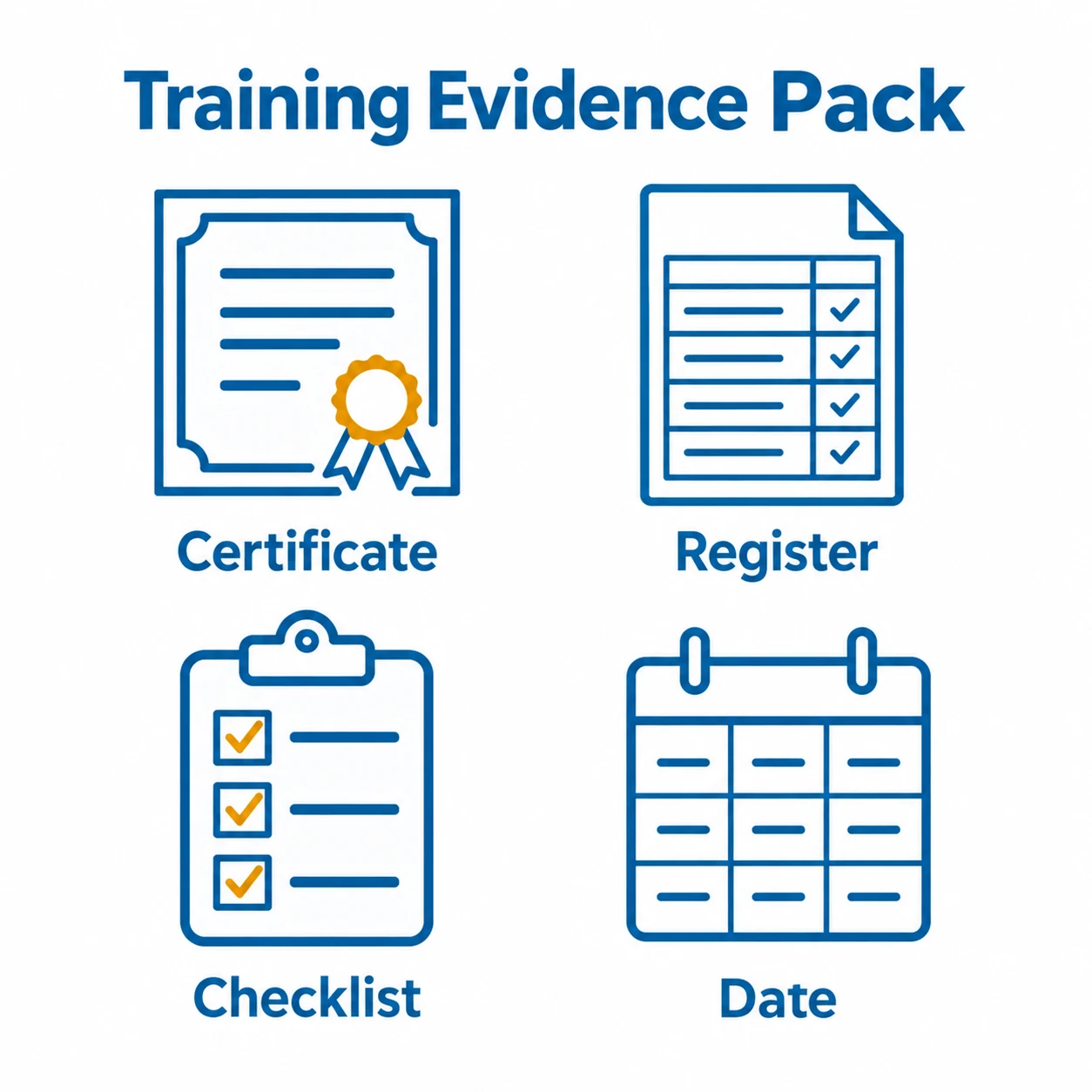
A good training record answers the questions a competent reviewer is likely to ask. Who attended? What was the topic? Who delivered it? How was understanding checked? Was the training relevant to the work? What evidence shows the worker completed it?
For formal courses, useful evidence can include course titles, dates, trainer details, learner names, attendance records, certificates, assessment outcomes and a copy of the course outline. Where the subject is practical, add details of any observed tasks or competence checks. For first aid courses, forklift training, construction NVQ support or health and safety training, records should make it clear what was actually taught rather than only naming the course.
For short briefings, toolbox talks and site inductions, the same principle applies. Keep the topic, date, names, signatures or digital confirmations, key points covered and any questions raised. If the briefing related to a new risk assessment, method statement, piece of equipment or site rule, record that connection. This links training to the actual risk being controlled.
How to evidence onsite briefings and practical instruction
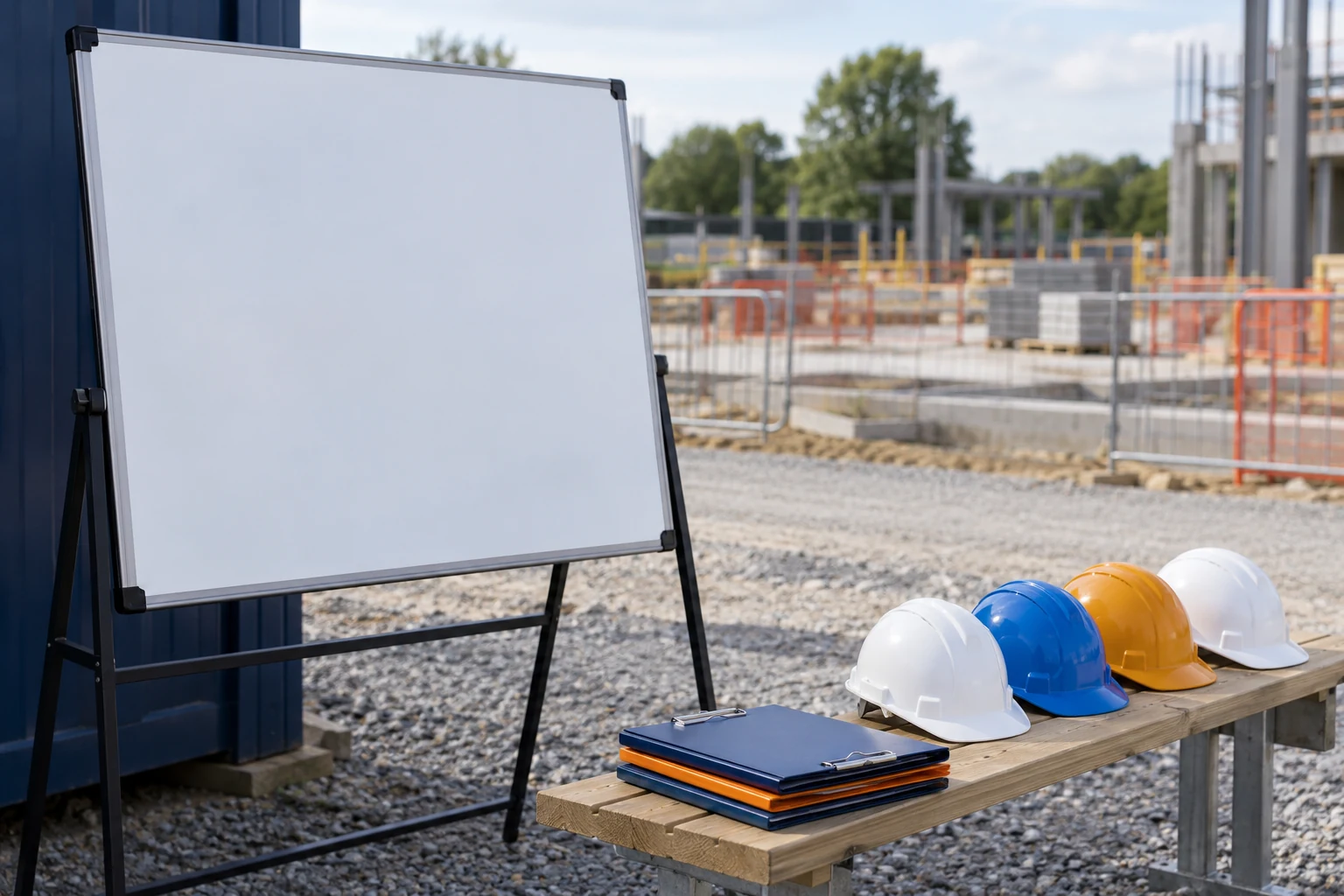
Onsite training is often the most relevant evidence for building site safety because it takes place close to the work. It can cover access arrangements, welfare, emergency procedures, exclusion zones, PPE, manual handling, housekeeping, moving vehicles and the specific controls for that project.
To evidence onsite briefings properly, start with a consistent attendance record. Names should be readable and matched to job roles or employer names where relevant. Add the briefing topic, the person delivering it and the main points covered. If the briefing included a practical demonstration, record what was demonstrated and how understanding was checked.
Photographs are not always necessary and should never replace a written record. The strongest evidence is usually a clear written trail supported by certificates, assessments, supervisor notes and signed acknowledgements. If digital systems are used, make sure records can be retrieved and show dates, names and course or briefing details clearly.
Onsite instruction is useful when workers need to understand how general construction safety rules apply to a particular task. CPN Training explains the value of practical delivery in its article on onsite training for construction teams.
Building a simple training matrix
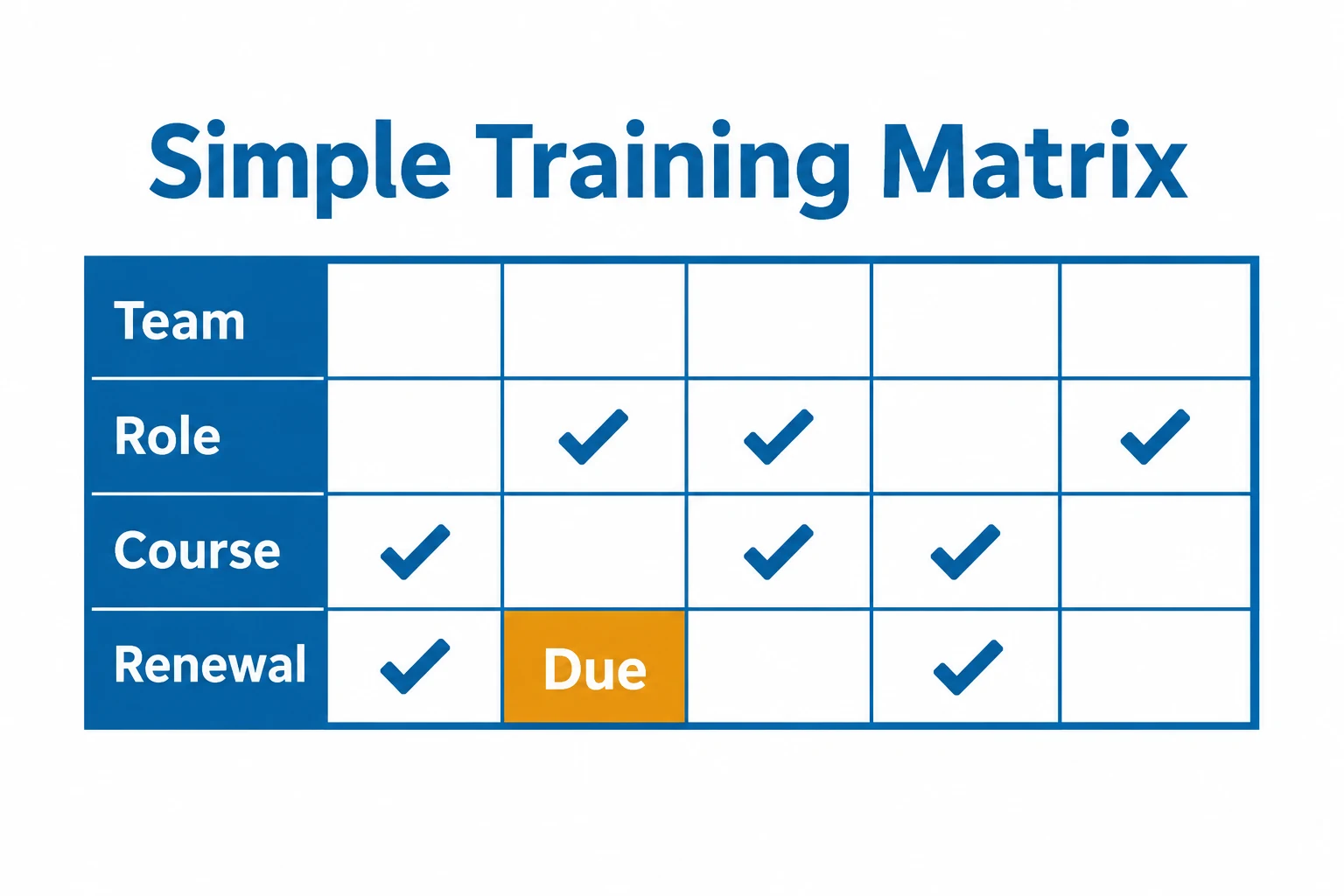
A training matrix is one of the easiest ways to turn separate records into a useful management tool. It lists workers down one side and required training across the top, then records completion dates, expiry dates where relevant, evidence held and any action needed.
The matrix should reflect the organisation and the type of work being carried out. A site operative, supervisor, forklift operator, first aider and manager may all need different evidence. Some training may be required before a person starts work, while other training may be planned as part of role development or in response to changes on site.
A good matrix does not need to be overloaded. It should show core construction site safety requirements, job related training, first aid provision, mental health training where relevant, plant or forklift competence, and any additional health and safety topics linked to the work. It should also point to where the proof is stored.
Review the matrix regularly. New starters, changing duties, new equipment, updated risk assessments and previous incidents can all create a need for further instruction. The matrix should help managers act early, rather than discovering a gap during a tender, audit or site inspection.
Making records credible and useful after training

When a buyer asks for evidence of training, they are usually looking for confidence. They want to see that training is planned, relevant and current. A certificate alone may help, but it is stronger when supported by a wider record showing how the training fits the role and the site.
Before sharing records, check that personal information is handled appropriately and that only relevant details are provided. A tidy evidence pack may include a training matrix, current certificates, induction records, toolbox talk logs, course outlines, assessment results and supervisor sign off notes. Keep the pack easy to follow so the reviewer can see the route from risk to training to proof.
Where mental health forms part of the safety approach, record it with the same care as physical safety training. Construction teams can face pressure, fatigue and communication challenges, and mental health first aid awareness can support a safer culture. CPN Training covers this wider safety picture in its article on mental health first aid on site.
Training evidence should not sit untouched until someone asks for it. Supervisors can use it to plan briefings, allocate tasks, confirm competence and decide where extra support is needed. After a course or briefing, managers should ask whether workers are using the right controls and whether supervisors are reinforcing the same messages.
For employers that want structured support, CPN Training provides health and safety training and onsite training services across areas such as construction safety awareness, forklift training, first aid courses, mental health training and construction NVQ support. The aim is simple, to help teams understand the risks, work safely and keep evidence that stands up to scrutiny.
- Training evidence should show who attended, what was covered, who delivered it and how understanding was checked.
- A training matrix helps employers see gaps, plan refreshers and respond to changes in work or risk.
- Onsite briefings should connect instruction to the task, the risk and the workers involved.
- Certificates are useful, but stronger evidence includes course outlines, attendance records, assessments and supervisor notes.
- Records should be reviewed regularly so they remain current, clear and ready for buyer or audit checks.
Frequently asked questions
What counts as evidence of construction safety training?
Useful evidence can include certificates, attendance logs, induction forms, toolbox talk records, course outlines, assessment results, training matrices and supervisor notes. The best evidence shows both completion and relevance to the worker’s role.
Do employers need records for short site briefings?
Yes. Short briefings can be important evidence when they relate to site rules, risk assessments, method statements or new hazards. Record the topic, date, attendees, key points and how understanding was confirmed.
How often should training records be reviewed?
Review records whenever roles, tasks, equipment, risks or site arrangements change. A regular review also helps identify expired certificates, missing inductions and workers who may need extra instruction.
Is a certificate enough to prove competence?
A certificate can be valuable, but competence also depends on experience, supervision, practical ability and the nature of the task. Employers should keep wider evidence where practical.
Need clearer training evidence?
CPN Training can help employers plan relevant construction safety training and keep practical records that support safer site teams.